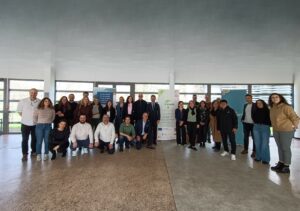
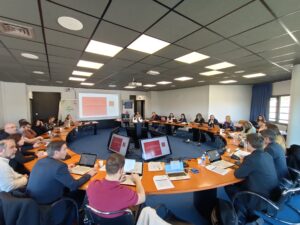
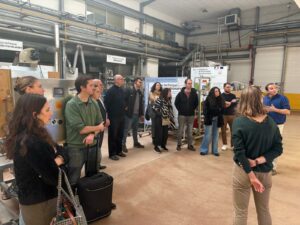
- The CESAM (Circular Economy and Sustainable Solutions for Agrifood in the Mediterranean) European project held its Steering Committee meeting and Good Practices Exchange Day in Montpellier on March 24th and 25th, with the attendance of all its institutional partners and SMEs.
- This event reinforced CESAM’s role as a key driver of knowledge exchange and innovation in the Mediterranean agrifood sector, while highlighting Montpellier as a hub for sustainable advancements.
On March 25, 2025, Agropolis International in Montpellier hosted the CESAM Exchange of Best Practices Day, a dynamic event aimed at promoting innovation and collaboration in sustainable agriculture, circular economy practices, and environmental management, in the context of the steering committee celebration. The event brought together representatives from clusters, SMEs, startups, and regional entities, featuring a series of impactful morning presentations followed by an afternoon visit to CIRAD, the French agricultural research and cooperation organization working for the sustainable development of tropical and Mediterranean regions.
The day began with the welcome from Philippe Bauchet, Director of the Ecological and Energy Transition of the Occitania Region, who highlighted the region’s commitment to sustainability and innovation. The morning session included a diverse range of presentations, starting with MedVallée, which showcased initiatives designed specifically for the Mediterranean region, addressing both agricultural and environmental challenges and opportunities.
Prisca Giraudo from the Occitania Region presented key insights into regional strategies for supporting sustainable agriculture and fostering innovation, while Gerald Naro from Ecocirculab introduced circular economy research and a business plan aimed at supporting circular startups, with a focus on waste reduction and resource optimization.
The Agri Sud-Ouest Innovation cluster followed with advancements in agroecology and sustainable farming practices tailored to southwestern France. Go Zero Waste presented practical solutions for waste reduction in agriculture and food production, while MicroTerra emphasized the importance of soil health and microorganism-based technologies to improve agricultural productivity sustainably.
Further presentations were delivered by the Vinseo and Innovi clusters, both showcasing sustainable practices in viticulture and winemaking. Asclepios Tech introduced its Boxilumix® solution, a photobiology-based technology designed to reduce food waste and agrochemical use, while extending shelf life and improving crop nutritional value. Subsistae shared insights into sustainable farming solutions aimed at addressing global food security and environmental conservation challenges, and Aquavalley presented expertise in water management technologies for agricultural, urban, and industrial applications. Ecofilae offered innovative approaches to ecological water treatment and reuse solutions for agricultural settings, and Newtimes concluded the morning with a focus on sustainable development through liquid bulk distributor technologies.
In the afternoon, participants had the opportunity to tour CIRAD’s cutting-edge facilities, which included visits to the Recycling and Risk Units, focused on transforming organic waste into valuable resources while managing environmental impacts, the Qualisud Platform dedicated to food quality research with an emphasis on sustainability, and the Biooweeb platform for plant biomass valorization, highlighting innovative methods to utilize and transform biomass resources.
The CESAM Exchange of Best Practices Day provided attendees with actionable insights into advanced technologies and strategies to tackle global challenges in agriculture, circularity, and environmental management. The event underscored the importance of collaboration between clusters, SMEs, startups, and regional entities to drive forward sustainability and circularity initiatives in the agrifood sector.
This event reaffirmed CESAM’s role as a key facilitator of knowledge exchange and innovation in Europe’s agrifood sector, while showcasing Montpellier as a hub for eco-friendly advancements.
On March 24, 2025, took place the Steering Committee meeting at Hôtel Region Montpellier, where partners reviewed all key work packages, with contributions from the project coordinator, the Euroregion Pyrénées-Méditerranée, the project officer, Virginie Perron, institutional partners: ACCIÓ, Agri Sud-Ouest Innovation, AD’OCC and Fundació Bit; and the SMEs Terracor, Derypol, Asclepios Tech, GoZeroWaste, and Newtimes.fr.